High Island, Texas

About 30 miles east of Galveston is the small town of High Island. Although it is a small community, birders the world over know the name. The Houston Audubon Society has converted a large portion of the town into a sanctuary, with wooded areas, and a heron rookery, and each spring, the area fills with migrating songbirds. The High Island Sanctuaries are a definite visit when we travel to the area.

Southeast Texas map

Southeast Texas map

In April, the rookery fills with Great Egrets, along with cormorants, eye-catching roseate spoonbills, and tri-colored and night herons, mating and building nests. For birders and especially photographers, the good news is the rookery is on an island about 20 yards from the pond banks. The pond, called “Claybottom Pond” is filled with alligators, making the island safe from predators such as raccoons; but of course, if any birds get too close, they make a meal for a hungry alligator!

For an unknown reason, this Great Egret pair was nesting a bit later than most of the others; the male would fly away and come back with nesting material, then present it to his mate, who would add it to the nest.  In this photo, his raised wing seems protective and caring.  I think I was fortunate to capture this moment; it’s one of our favorite photos…

Great Egrets build their nest

A Great Egret pair works together to build their nest at The Rookery, High Island, Texas


Sony Alpha 100, Tamron 300 f/2.8 with Tamron 2x teleconverter, Manfrotto tripod


Red Reflections

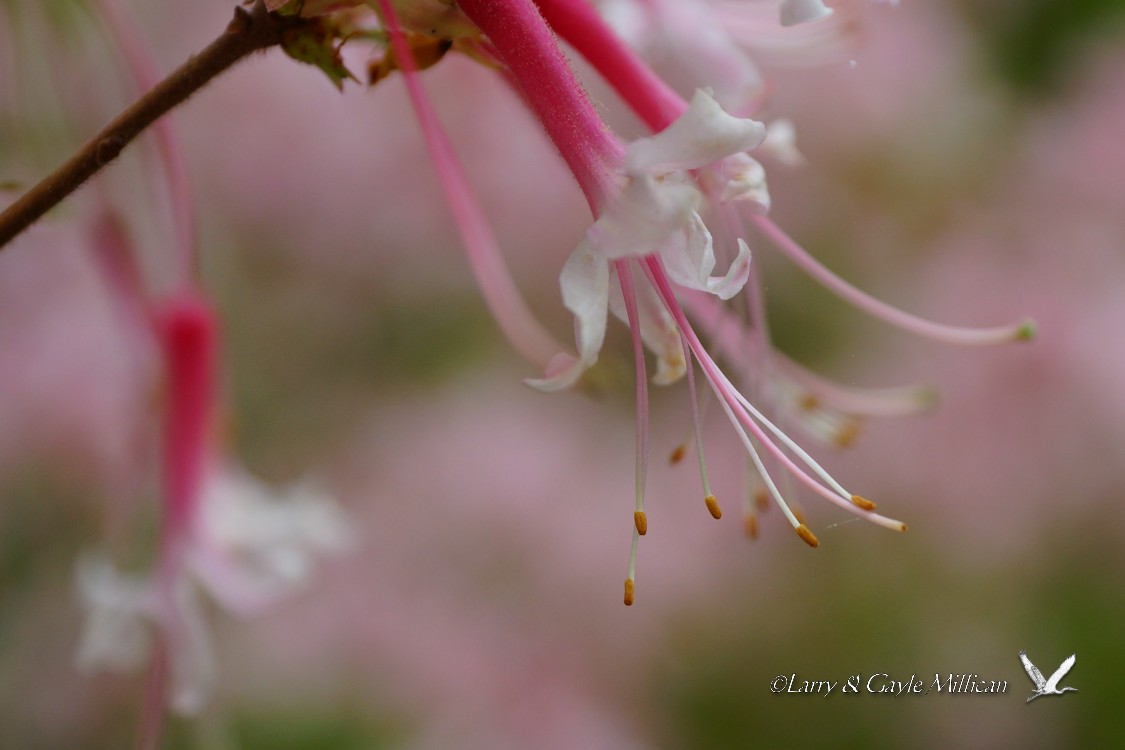
I first saw reflections in water drops in a magazine – probably Outdoor Photographer.  The photos were fascinating, and I decided it was a subject/technique I needed to learn.  There were a number of failures over the years, until this photo.

On the day I took this, I was visiting Cherokee Prairie Natural Area.  In fact, I had been there for a while, searching the Prairie for just the right combination of water drops, grass tangles, flowers, and light.  I had no success, and was walking back to my truck, when at the very edge of the parking area was a perfect arrangement.  I set the tripod up in the short grass of the parking area, and made a number of exposures…

One of the problems with making these photographs is that all of the vegetation – grass, flowers, shrubs, briars – is connected!  Setting a tripod up without causing the water drops to fall is sometimes impossible.  Often, I get it almost just right, move the tripod – or the camera & lens – and bump or pull something, causing the water drops to disappear.  So, finding this at the parking lot was exciting!  Ever since that day, I always look around the parking area before heading off into the grasses of the prairie…

Wild rose reflected in water drops on grass

Wild rose reflected in water drops on grass
Cherokee Prairie State Natural Area, near Charleston, Arkansas

I have always like the sharpness of this image, but would like to have the same situation again; I think it deserves some different compositions, and would like to shoot it with one of today’s higher resolution cameras.  However, photographs are the reflection of a moment, then it’s history.  As much as we might wish to relive our past, we cannot…  😉


Minolta Maxxum 7D, Minolta Maxxum 100 mm macro lens, Manfrotto tripod.

Reflections

Each spring, I look forward to going out to locate, and photograph dew drops reflecting, preferably, a wildflower.  Of course, any breeze, even one barely felt on skin, is the enemy.  So, we hope for no breeze, large dew drops easily photographed, and a colorful wildflower behind…

On this morning, I found a spiderweb covered in dew, and in the background was a black-eyed susan wildflower.  However, there was a nearly imperceptible breeze – just enough to move the spiderweb.  I took several photos, trying to time the exposure for the least movement.  Here is one of the best, but because of the air movement, I was unable to keep all in sharp focus.

Dew drops on a spider web reflect the black eyed susan flower in the background.

Dew drops on a spider web reflect the black eyed susan flower in the background.


I took this photo at Cherokee Prairie Preserve State Heritage Site, near Charleston, Arkansas, using the Sony Alpha 700, the Minolta 100 mm macro lens, Manfrotto tripod.  The shutter speed was 1/320th second, in an attempt to freeze the movement from the breeze, at f/8.

Red-winged Blackbird

Taking flight? Or, flashing his epaulets?

It’s just a moment in his life, but I was there, and photographed that moment. When I look at this photo, I remember the joy I felt in sharing that moment. It was my first trip to the “Upper Texas Gulf Coast”, and there was much to see and photograph. This bird landed just for a moment on a cat tail stalk at Anahuac National Wildlife Refuge. The day was overcast, and my film camera was loaded with Kodak Ektachrome 100 speed film – as was often the case in those days.

So, technically speaking, this is not a great photograph; the background is too bright, there is too much empty space, the light was all wrong, the bird is not sharp, and he’s looking out of the frame. But for me, it’s all about remembering a moment in time. Isn’t that what photography is about? Isn’t that why we take pictures?

Red-winged Blackbird, Anahuac National Wildlife Refuge

Minolta Maxxum 9xi, Tamron 300 mm lens, Tamron 2x teleconverter, Bogen tripod, shot from the window of a Chevy S-10 truck. Shot on slide film, the slide was later scanned using a “Kodak Photo CD” scanner, hence the small border – which I have intentionally left showing.

Angry Bird

Angry Bird

In one of our favorite destinations, Texas’ Brazos Bend State Park, spring is when a number of bird species nest, brood, and raise their chicks.  One of our favorite birds is the handsome Yellow-crowned Night-Heron, with striking colors and intriguing behavior.  (By the way, their feet are not green.) 🙂

Adult Yellow-crowned Night Heron in Brazos Bend State Park, Texas

However, the chicks are less handsome, and this one looks like the original “Angry Bird.”

A juvenile Yellow-crowned Night Heron, Brazos Bend State Park, Texas

We used the Sony Alpha 700 camera, with a Tamron 300mm f/2.8 and Tamron 2x teleconverter, on a Manfrotto tripod.

Great Blue Heron

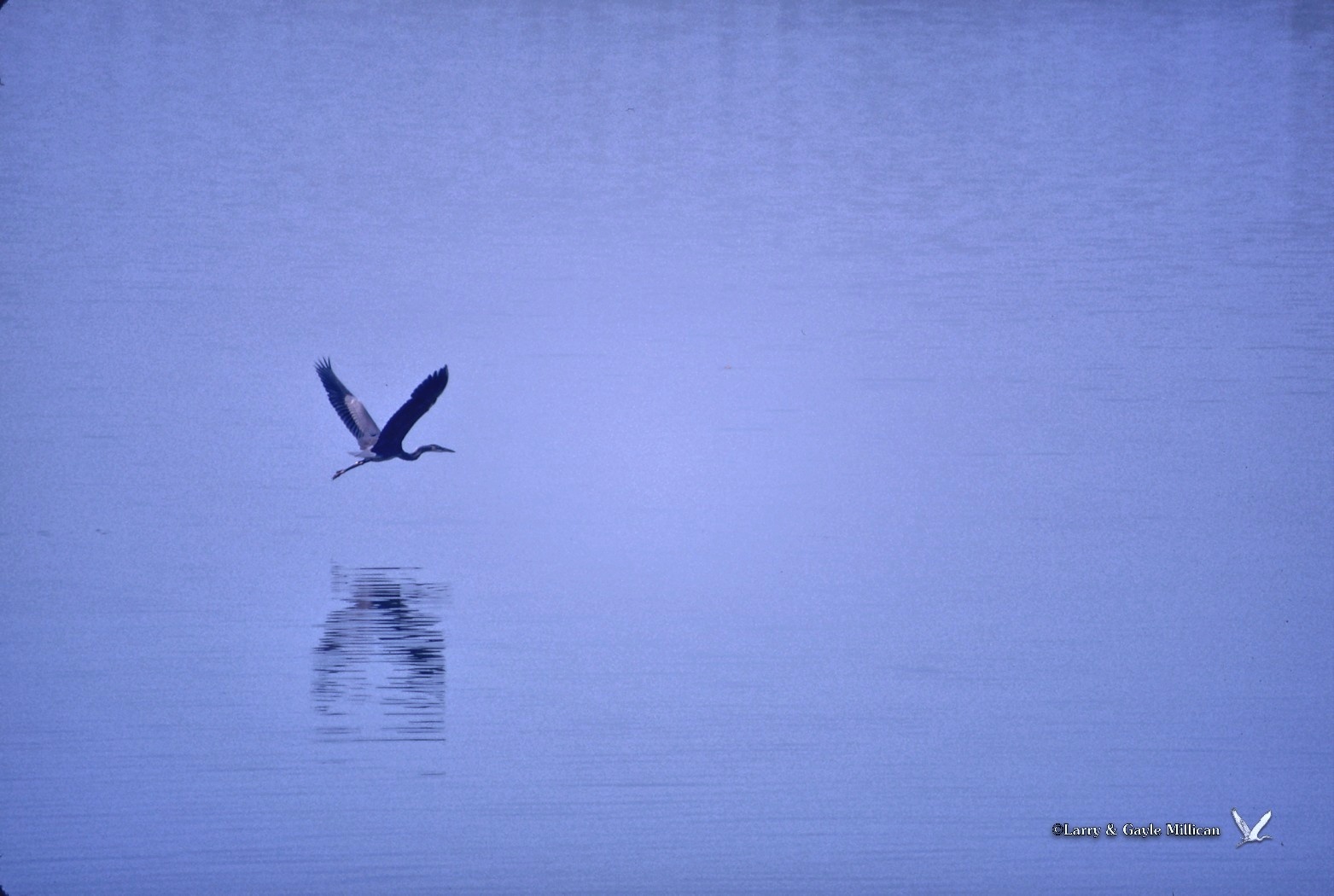
This is about a photo taken a long time ago…

About 25 miles from Fort Smith, along the south side of the Arkansas River, is a Corps of Engineers campground called Citadel Bluff. Wooded and seemingly removed from civilization, this small park has long been a favorite spot of mine for birds and wildlife. I have seen numerous bald eagles, pelicans, cormorants, and more. And, I have always seen great blue herons.

On this day, I walked down the trail which parallels the river, through the woods to a stand of cane. Just beyond the cane is a small cove. I came out of the cane, and the heron flew from just a few yards away. After I recovered from my surprise, I raised my camera and took two photos: one with his wings upraised, and another on his downswing. I like the simplicity of the photo – just the heron, its reflection, and the Arkansas River.

Minolta Maxxum film camera, Tokina 400 mm f/5.6 lens – both are no longer made…

Of Alligators, Ducks, and a Sunset

Brazos Bend State Park is roughly an hour southwest of Houston, Texas. In this park are many alligators, which is surprising to many people. After all, this is Texas, home of cowboys and The Alamo…

Actually, there are alligators all along the Texas coast, from Louisiana to Corpus Christi, but this State Park may have the largest population per acre in the state. They’re in the lakes and swamps, and they love to lie in the warm sun on the trails.

Gayle looks forward more to photographing the alligators than the birds in the park – and this is one of the best places I’ve seen for birds!

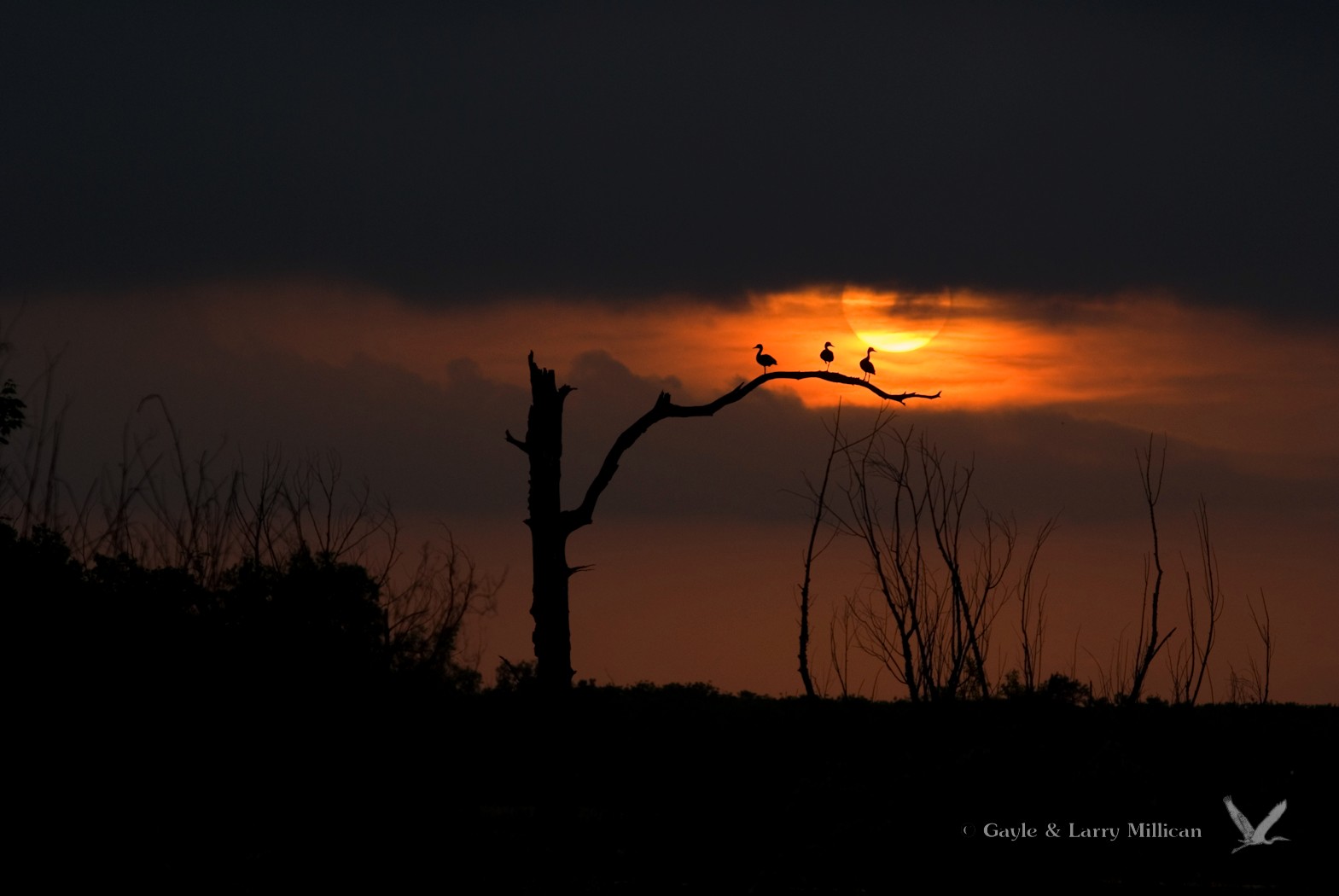
On this trip, we had just arrived, and as soon as we were settled, we headed out to the trail around Elm Lake. Gray clouds filled the sky, and although not dark, they weren’t the kind you wanted to have behind your subject. As we walked the trail, I saw several Black-bellied Whistling-Ducks in a dead tree not too far away. I stopped and took some photos, trying to silhouette the ducks against the gray clouds.

Black-bellied Whistling-Ducks

Black-bellied Whistling-Ducks in a dead tree, silhouetted against gray clouds, Brazos Bend State Park, Texas

Gayle had kept going down the trail, but she was within my sight. After I took a few photos, I headed her way. When I was close enough, I could see she was set up near an alligator…

Gayle, photographing an alligator, Brazos Bend State Park, Texas

She got some pretty good images, including this one.

Brazos Bend Alligator

Alligator at Brazos Bend State Park, by Gayle Millican

After photographing the gator for a while, I saw that the clouds were beginning to break up. I dragged Gayle away from the alligator, telling her that we were about to be blessed with a great sunset. We headed back to the spot where I had photographed the ducks earlier.

Sure enough, after we had barely set up our tripods, the sun began to make its appearance.

Gayle’s first photo of the sunset, her zoom lens set to about 200 mm

We each took about 20 photographs, then it was over…

Black-bellied Whistling-Ducks at sunset, Brazos Bend State Park, Texas

Lessons learned: Keep your eye on the sky, and always be ready, for anything!

Cameras used were Sony Alpha, with Tamron lenses.

A Morning at the Nature Center

The Janet Huckabee Arkansas River Valley Nature Center, actually.  That’s a mouthful; so those of us in the area simply say “The Nature Center.”  Regardless, it is a marvelous nature resource for the Western Arkansas region.

Recently, Jim Nieting and I spent a few morning hours walking some of the trails at the Nature Center, with cameras in hand.  Once again, I was amazed at the resource this is for us.  We saw or heard a number of bird species, numerous butterflies, a cottontail rabbit, and more…

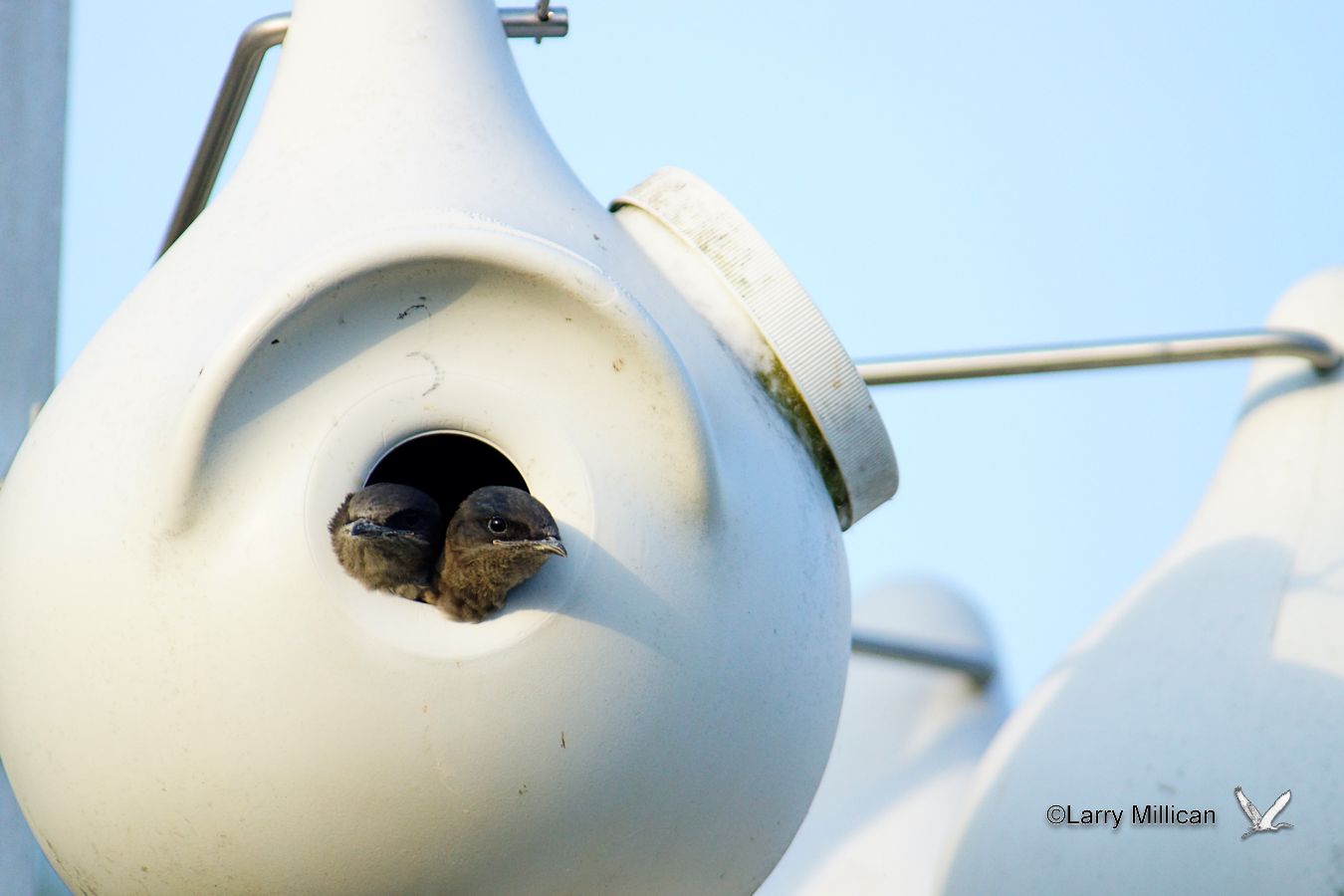
At the Visitor Center, the staff has installed housing for Purple Martins, and it is very active.  Here are a couple of nestlings looking for their parents.

Purple Martin Chicks

Looking for their next meal on the wing

Also, near the Visitor Center, are a number of Canada Geese.  Most of us have more photos than we’ll ever need of this species, but I usually cannot resist taking another.

Canad Goose at the Nature Center

Canada Goose at the Nature Center

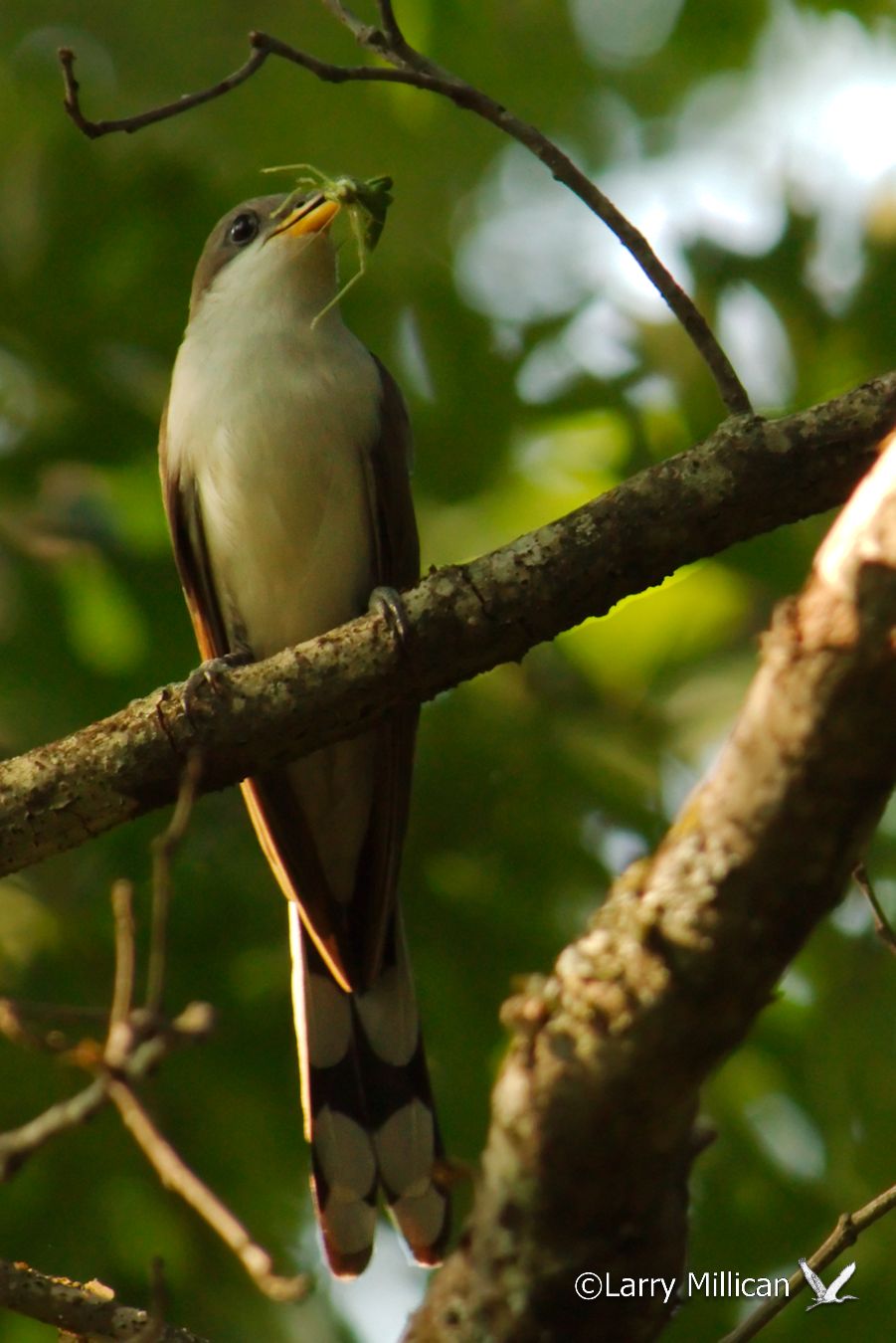
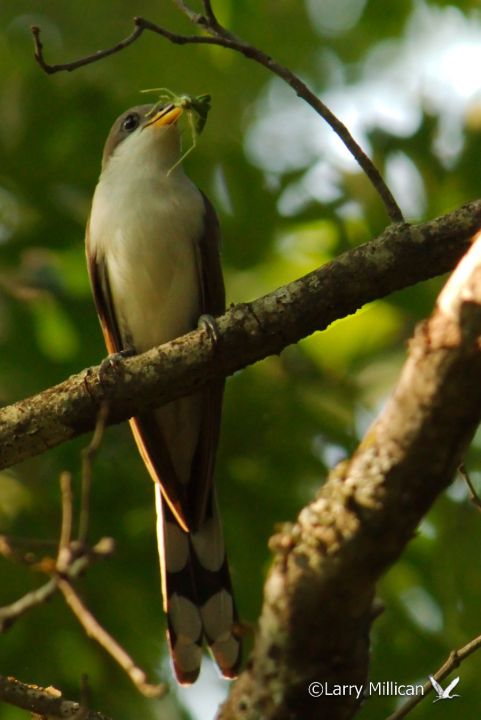
From the Visitor Center, we headed out on the Beaver Creek Trail, where we heard and eventually found probably the highlight of the morning:  a pair of yellow-billed cuckoos.  Here’s one of them.
Yellow-Billed Cuckoo

Yellow-Billed Cuckoo, with snack

Lots of butterflies, including this Pipevine Swallowtail:

Pipevine Swallowtail

Pipevine Swallowtail, enjoying the sun

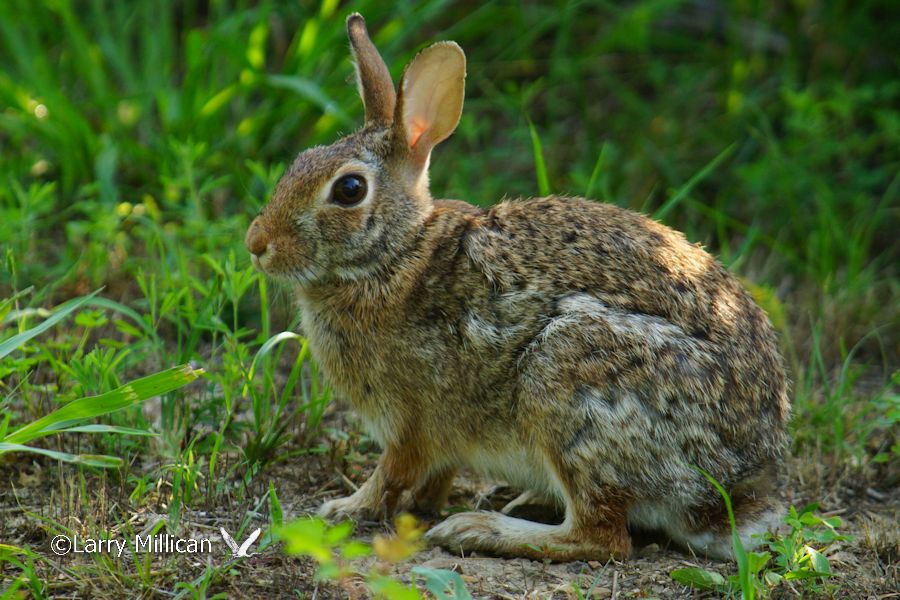
On the Wells Lake Trail, we found this Cottontail Rabbit, very near Wells Lake.  He posed for us for quite some time.
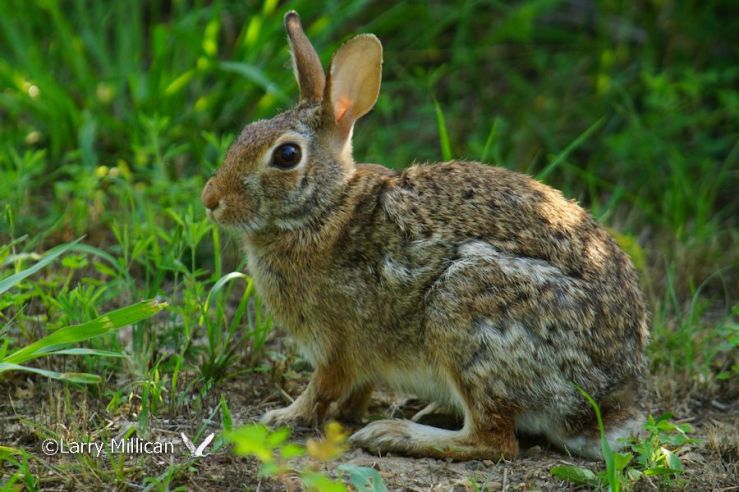
Cottontail Rabbit

Cottontail Rabbit, near Wells Lake

Among the butterflies, we saw Hummingbird Moths.  Hard to photograph, because they never stop moving – and they move fast!  🙂
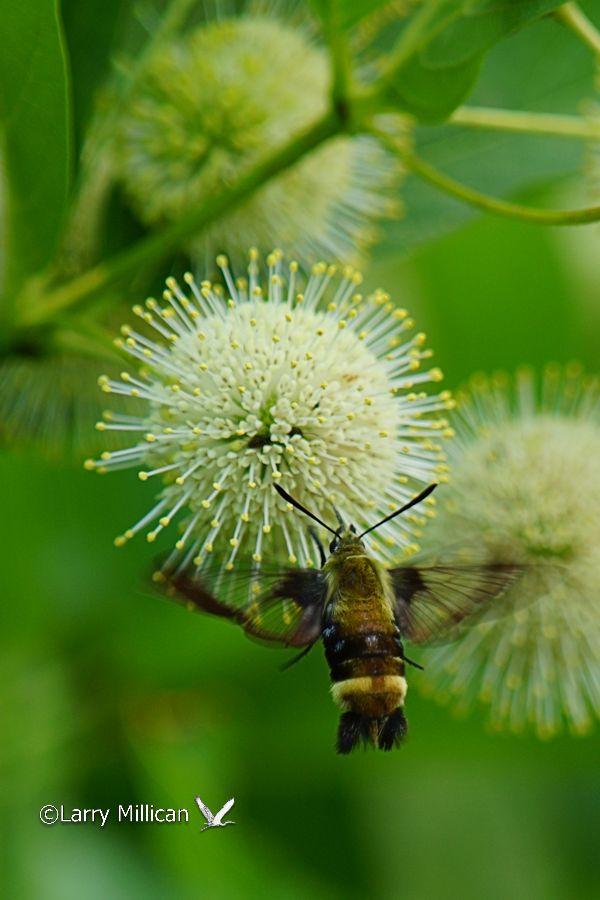
Hummingbird Moth

Hummingbird Moth at the Nature Center

Finally, as I was heading home, I saw this Scissor-Tailed Flycatcher on a high-line wire.  Technically, not at the Nature Center, but close enough to count as part of my morning adventures…
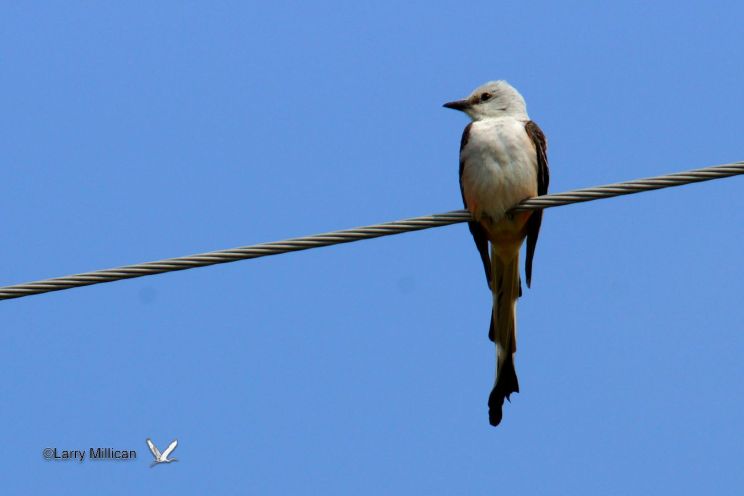
Scissortailed Flycatcher

Scissor-tailed Flycatcher, near the Nature Center

The Janet Huckabee Arkansas River Valley Nature Center is one of 4 the Arkansas Game & Fish Commission has built across the state of Arkansas.  In Western Arkansas, we are appreciative of and thankful for the facility.  As you can see, there is a large variety of fauna as well as flora to be seen here; I’ve only touched on a small portion of it.

All photos were taken with a Sony Alpha 77, and a Tamron 200-500 lens.  Yes, I used a tripod, built by Manfrotto.

Also, a big thank you to my fellow photographer, Jim Nieting. Definitely a better birder than I; several he saw and identified before I knew they were around. 🙂

Of Waterfalls and Wildflowers

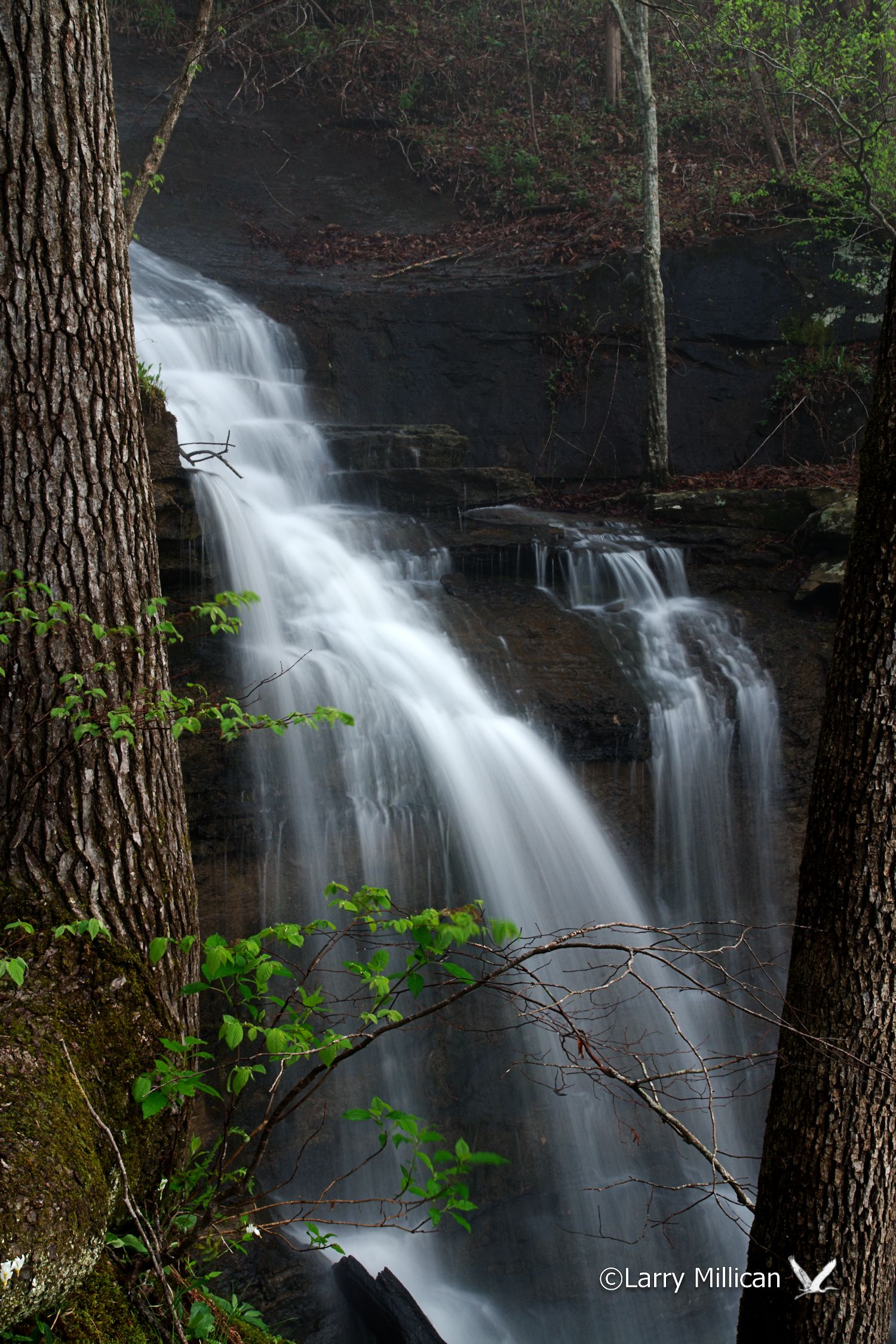
In late March, I took a week off from work.  The first day, I went to see a waterfall along the Mulberry River.  It’s one of those only showy during the rainy season, and the week before, we had substantial rainfall; unfortunate for those on spring break, but a nice set up for waterfall hunters.  🙂  Three years ago, my friends Mike Leonard (www.michaelleonardphotography.org) and Jim Anderson showed this particular waterfall to us, and Gayle and I were fortunate to sell some prints from this location.

So, I drove there again this year.  Here’s what I found.

Image

To get to this spot requires a climb of about 150 feet up the side of the steep hill.  I think it’s worth the effort.  After a series of photos at this spot, I moved to the other side, and further up the hill:

Image

What I didn’t notice in this image were the white wildflowers at the lower left.  My excuse is that I was concentrating on the waterfall and on not falling!  It was steep and slippery…

So, recently, Mike Leonard was printing this photo for a display at Bedford’s, and pointed out the flowers to me.  I looked them up in Audubon’s Guide to North American Wildflowers on my iPhone.  They are “Eastern Shootingstar.”  I’d never taken a photo of them.  But – they bloom from April to June, so a few days ago, I went back to see if they had bloomed again.

Back up the hill.  This time, the waterfall was only a trickle.  No shootingstars bloomed.  Not surprised, but I was disappointed.  However, the spiderworts were in full bloom and everywhere!  🙂

Image

Spiderworts have long been a favorite of mine, and I seldom pass on an opportunity to photograph them.  After this photograph, and others, I headed back down the hill, then the short walk back to where I had parked.  Beside the road, so close that my tripod was partially in the road, was this little flower.

Image

Looks to me like a freshly bloomed Eastern Shootingstar!  There was only one bloom, but to the left are several buds.  I didn’t see any others in the area, nor during the walk back to the car.  So… my biggest disappointment that morning was that the enemy Time passed far too quickly.  🙂

All photos were taken with the Sony Alpha 77.  For the flowers, I used the Minolta 100mm macro lens; the waterfall photos were shot with a Tokina 11-16 f/2.8 and a Tamron 17-50 f/2.8 lens.

Butterfiles along the Cossatot

Driving the backroads within the Cossatot River State Park & Natural Area, it was warm, dry, and dusty.  I was exploring, and watching for interesting subjects.  Alongside the road was a patch of thistle, the flowers in full, fresh bloom.  Swallowtail butterflies were swarming the blooms – yellow tiger, spicebush, and two-tailed swallowtails were everywhere.  They were in a feeding frenzy, and paid little attention to me and my camera.  Again, I had the 70-210 f/4 Minolta lens mounted on the camera; a long enough lens that I could reach the butterflies without being too close to cause them discomfort, but short enough that I could find them in the viewfinder quickly.  I set the aperture to f/4, with a fast shutter speed of 1/1500 sec to freeze their movements.

Here are a couple of photos.  Butterflies, flying flowers…

Eastern Tiger Swallowtail Papilio [Pterourus] glaucusEastern Tiger Swallowtail