Route 66

A couple of years ago, we spent a day traveling from Tulsa, Oklahoma to Oklahoma City, via the remains of old Route 66.  In some areas, there is still highway; in others, we have to travel on newer roads that parallel the old.  We plan to do more, but for now, here are a few images from that day.

Many of the attractions from the old days are still in place – as well as new ones for the tourists.  It is interesting to note that many people, some from around the world, come to see what was known as “The Mother Road,” even those that are too young to have ever traveled upon the road…

The 5 and Diner restaurant, Tulsa

A neon sign lights up the Tulsa night at the 5 and Diner restaurant, reminiscent of a 50’s diner

Coca-Cola Sign refurbished in Stroud

In Stroud, a Coca-Cola sign has been colorfully restored on the side of a downtown building.

Hickory House Mural

Mural painted on the wall of the Hickory House Barbecue Restaurant in Sapulpa depicts Route 66 scenes and history

Chandler Interpretive Center

The Chandler Interpretive Center is an interactive multimedia museum, with film clips of Route 66 stories, viewed in seats from period cars, theatre seats, and even a motel bed.

The Old Cotton Gin

The Old Cotton Gin, it has also been a restaurant, an antiques store, and a second-hand goods store.

Having lived in California for several years as a child, I remember traveling Route 66 to visit family in Oklahoma.  Before there was an Interstate 40 highway, we drove through Arizona, New Mexico, Texas, and into our home state of Oklahoma.  Nostalgic?  Perhaps, but I also appreciate the history represented by the remnants of old Route 66…

These photographs were created with a Sony Alpha 77 camera, a Tamron 17-50 lens, and often a circular polarizing filter.  I edited the raw files with Paint Shop Pro.

Red-winged Blackbird

Taking flight? Or, flashing his epaulets?

It’s just a moment in his life, but I was there, and photographed that moment. When I look at this photo, I remember the joy I felt in sharing that moment. It was my first trip to the “Upper Texas Gulf Coast”, and there was much to see and photograph. This bird landed just for a moment on a cat tail stalk at Anahuac National Wildlife Refuge. The day was overcast, and my film camera was loaded with Kodak Ektachrome 100 speed film – as was often the case in those days.

So, technically speaking, this is not a great photograph; the background is too bright, there is too much empty space, the light was all wrong, the bird is not sharp, and he’s looking out of the frame. But for me, it’s all about remembering a moment in time. Isn’t that what photography is about? Isn’t that why we take pictures?

Red-winged Blackbird, Anahuac National Wildlife Refuge

Minolta Maxxum 9xi, Tamron 300 mm lens, Tamron 2x teleconverter, Bogen tripod, shot from the window of a Chevy S-10 truck. Shot on slide film, the slide was later scanned using a “Kodak Photo CD” scanner, hence the small border – which I have intentionally left showing.

Angry Bird

Angry Bird

In one of our favorite destinations, Texas’ Brazos Bend State Park, spring is when a number of bird species nest, brood, and raise their chicks.  One of our favorite birds is the handsome Yellow-crowned Night-Heron, with striking colors and intriguing behavior.  (By the way, their feet are not green.) 🙂

Adult Yellow-crowned Night Heron in Brazos Bend State Park, Texas

However, the chicks are less handsome, and this one looks like the original “Angry Bird.”

A juvenile Yellow-crowned Night Heron, Brazos Bend State Park, Texas

We used the Sony Alpha 700 camera, with a Tamron 300mm f/2.8 and Tamron 2x teleconverter, on a Manfrotto tripod.

Great Blue Heron

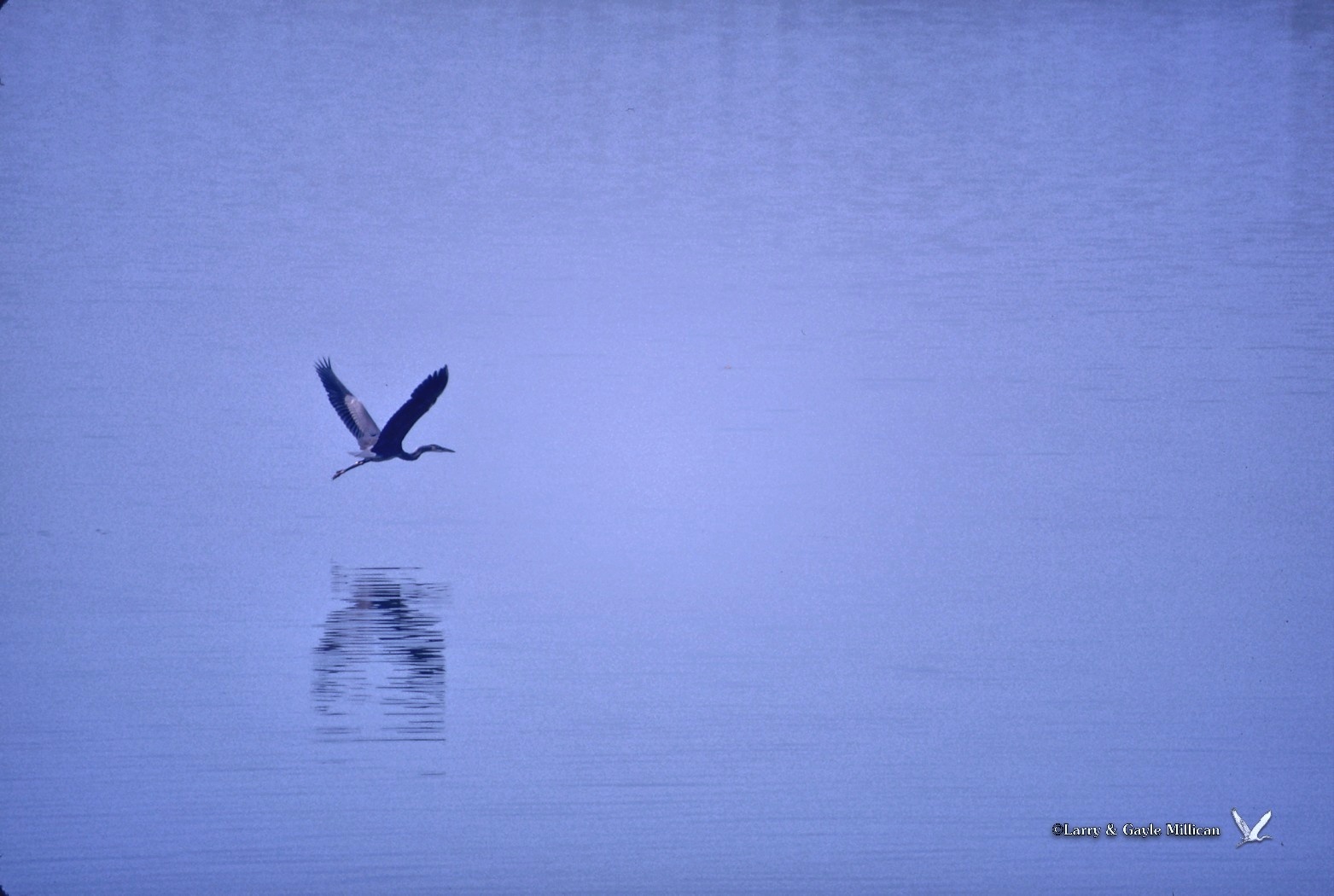
This is about a photo taken a long time ago…

About 25 miles from Fort Smith, along the south side of the Arkansas River, is a Corps of Engineers campground called Citadel Bluff. Wooded and seemingly removed from civilization, this small park has long been a favorite spot of mine for birds and wildlife. I have seen numerous bald eagles, pelicans, cormorants, and more. And, I have always seen great blue herons.

On this day, I walked down the trail which parallels the river, through the woods to a stand of cane. Just beyond the cane is a small cove. I came out of the cane, and the heron flew from just a few yards away. After I recovered from my surprise, I raised my camera and took two photos: one with his wings upraised, and another on his downswing. I like the simplicity of the photo – just the heron, its reflection, and the Arkansas River.

Minolta Maxxum film camera, Tokina 400 mm f/5.6 lens – both are no longer made…

Of Alligators, Ducks, and a Sunset

Brazos Bend State Park is roughly an hour southwest of Houston, Texas. In this park are many alligators, which is surprising to many people. After all, this is Texas, home of cowboys and The Alamo…

Actually, there are alligators all along the Texas coast, from Louisiana to Corpus Christi, but this State Park may have the largest population per acre in the state. They’re in the lakes and swamps, and they love to lie in the warm sun on the trails.

Gayle looks forward more to photographing the alligators than the birds in the park – and this is one of the best places I’ve seen for birds!

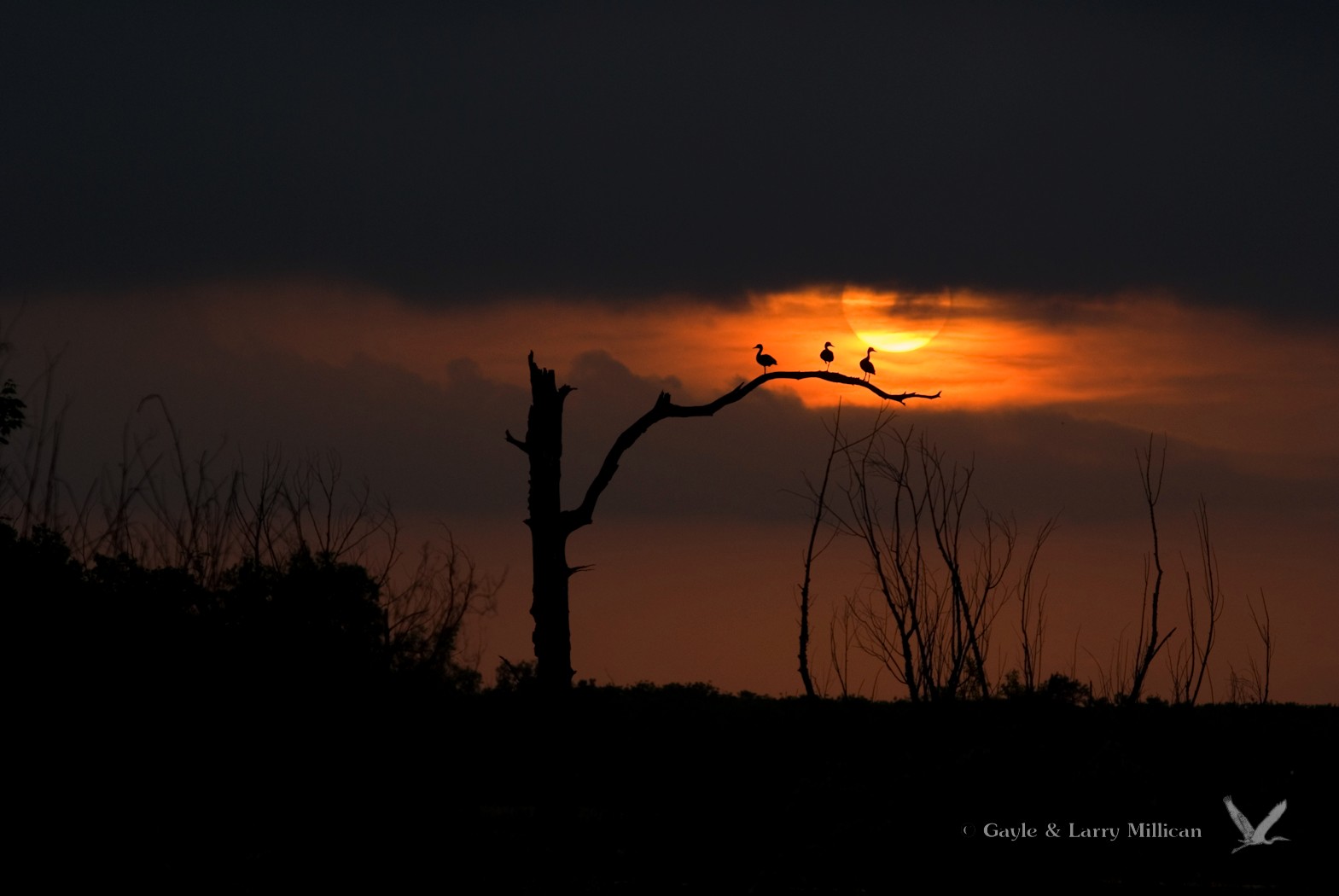
On this trip, we had just arrived, and as soon as we were settled, we headed out to the trail around Elm Lake. Gray clouds filled the sky, and although not dark, they weren’t the kind you wanted to have behind your subject. As we walked the trail, I saw several Black-bellied Whistling-Ducks in a dead tree not too far away. I stopped and took some photos, trying to silhouette the ducks against the gray clouds.

Black-bellied Whistling-Ducks

Black-bellied Whistling-Ducks in a dead tree, silhouetted against gray clouds, Brazos Bend State Park, Texas

Gayle had kept going down the trail, but she was within my sight. After I took a few photos, I headed her way. When I was close enough, I could see she was set up near an alligator…

Gayle, photographing an alligator, Brazos Bend State Park, Texas

She got some pretty good images, including this one.

Brazos Bend Alligator

Alligator at Brazos Bend State Park, by Gayle Millican

After photographing the gator for a while, I saw that the clouds were beginning to break up. I dragged Gayle away from the alligator, telling her that we were about to be blessed with a great sunset. We headed back to the spot where I had photographed the ducks earlier.

Sure enough, after we had barely set up our tripods, the sun began to make its appearance.

Gayle’s first photo of the sunset, her zoom lens set to about 200 mm

We each took about 20 photographs, then it was over…

Black-bellied Whistling-Ducks at sunset, Brazos Bend State Park, Texas

Lessons learned: Keep your eye on the sky, and always be ready, for anything!

Cameras used were Sony Alpha, with Tamron lenses.

A Morning at the Nature Center

The Janet Huckabee Arkansas River Valley Nature Center, actually.  That’s a mouthful; so those of us in the area simply say “The Nature Center.”  Regardless, it is a marvelous nature resource for the Western Arkansas region.

Recently, Jim Nieting and I spent a few morning hours walking some of the trails at the Nature Center, with cameras in hand.  Once again, I was amazed at the resource this is for us.  We saw or heard a number of bird species, numerous butterflies, a cottontail rabbit, and more…

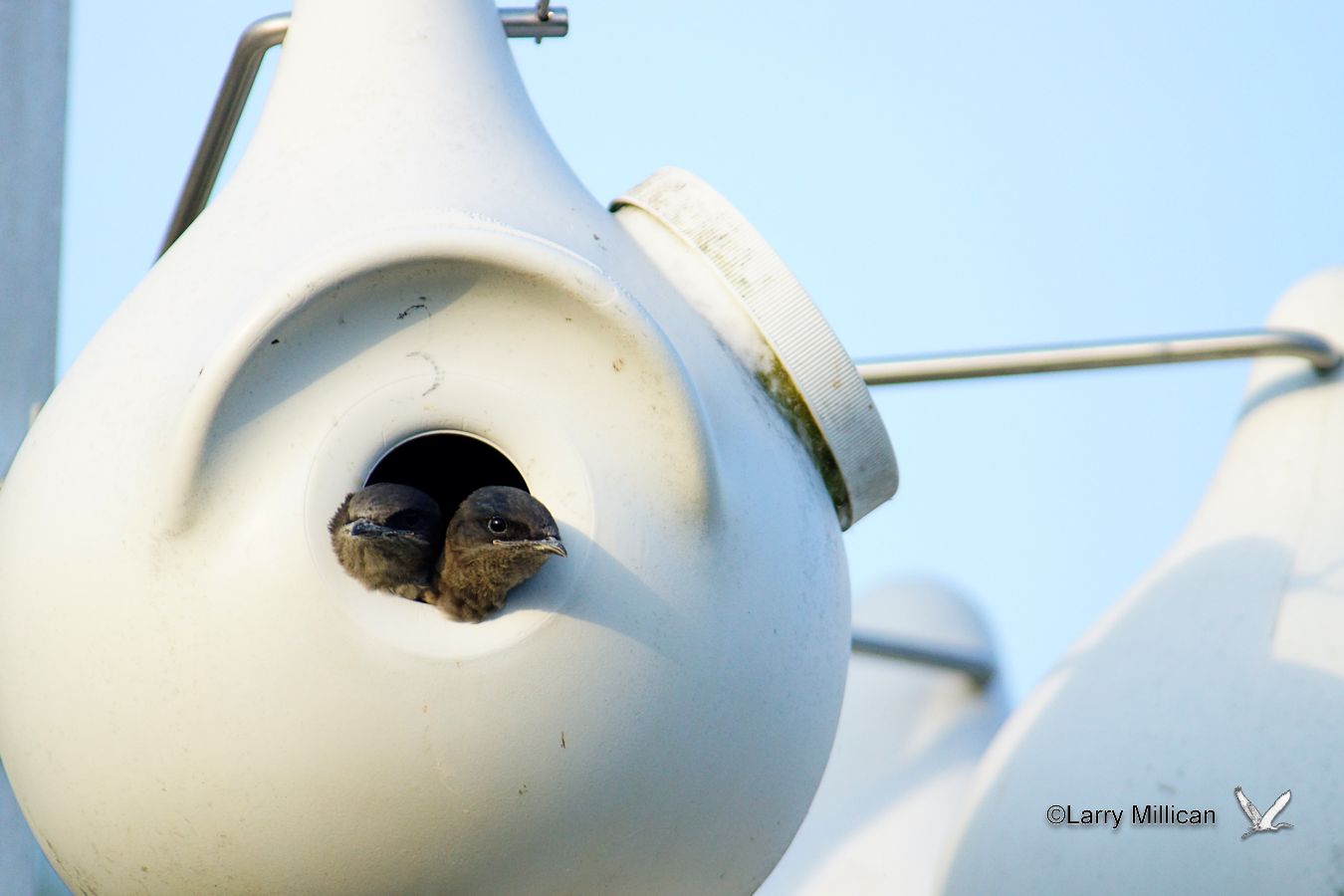
At the Visitor Center, the staff has installed housing for Purple Martins, and it is very active.  Here are a couple of nestlings looking for their parents.

Purple Martin Chicks

Looking for their next meal on the wing

Also, near the Visitor Center, are a number of Canada Geese.  Most of us have more photos than we’ll ever need of this species, but I usually cannot resist taking another.

Canad Goose at the Nature Center

Canada Goose at the Nature Center

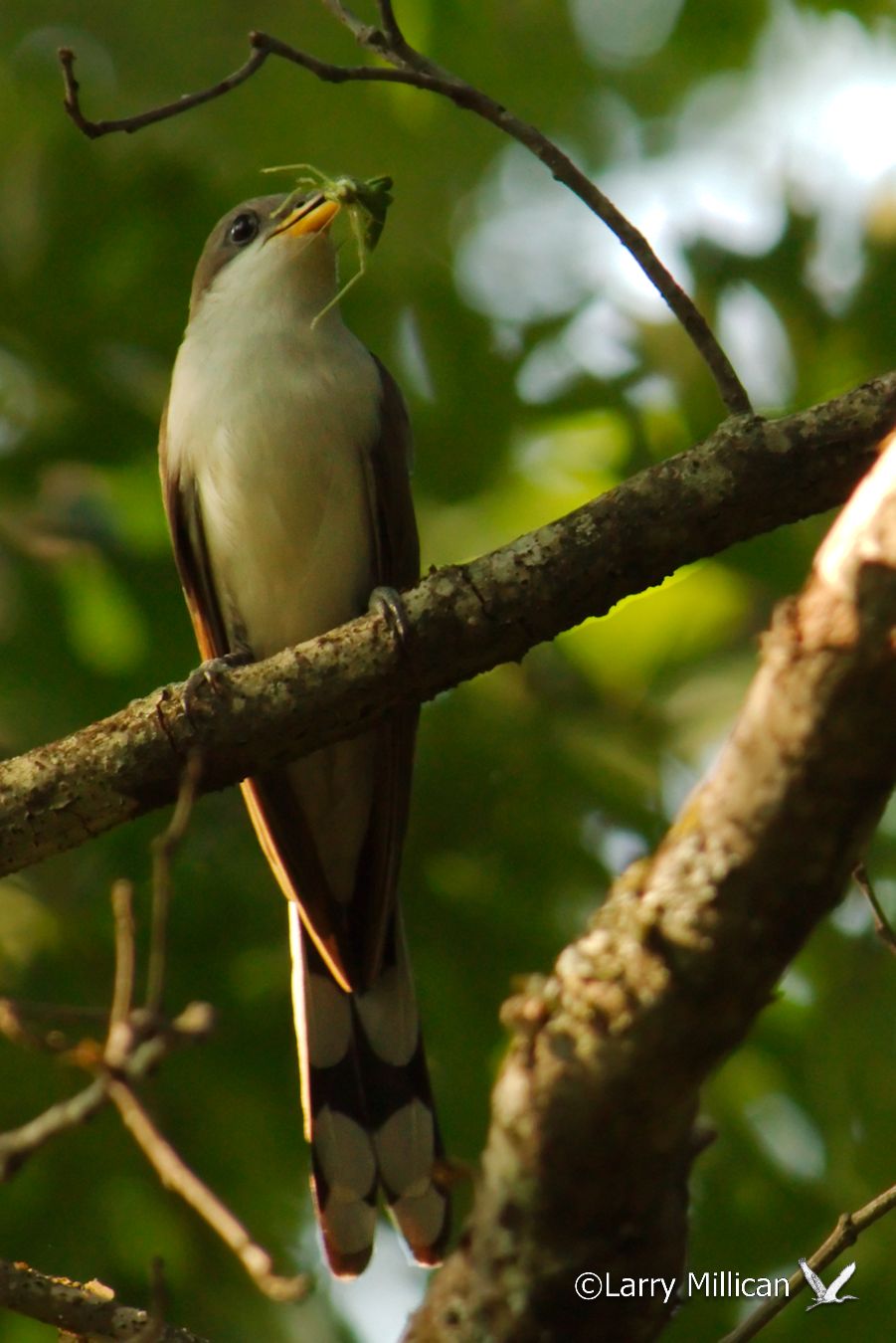
From the Visitor Center, we headed out on the Beaver Creek Trail, where we heard and eventually found probably the highlight of the morning:  a pair of yellow-billed cuckoos.  Here’s one of them.

Yellow-Billed Cuckoo

Yellow-Billed Cuckoo, with snack

Lots of butterflies, including this Pipevine Swallowtail:

Pipevine Swallowtail

Pipevine Swallowtail, enjoying the sun

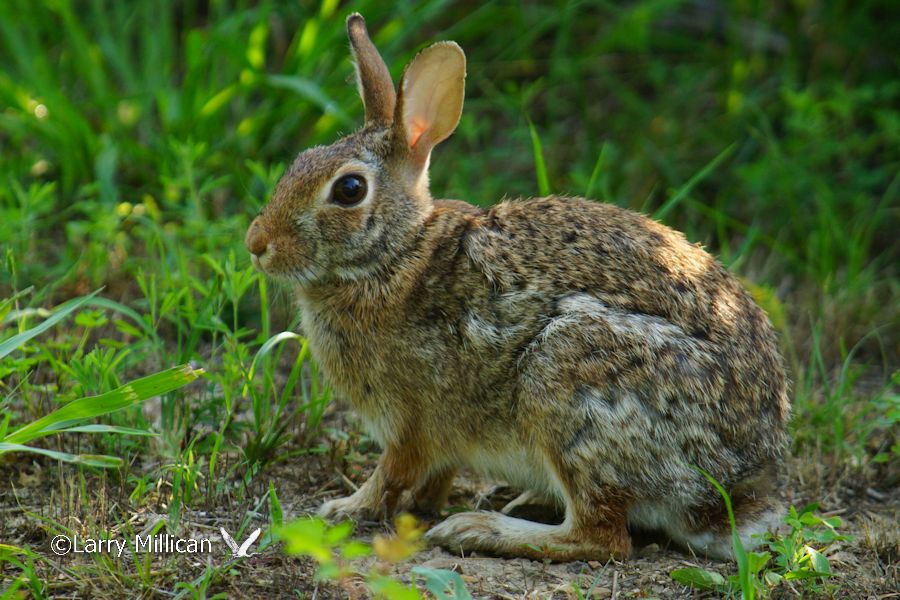
On the Wells Lake Trail, we found this Cottontail Rabbit, very near Wells Lake.  He posed for us for quite some time.

Cottontail Rabbit

Cottontail Rabbit, near Wells Lake

Among the butterflies, we saw Hummingbird Moths.  Hard to photograph, because they never stop moving – and they move fast!  🙂

Hummingbird Moth

Hummingbird Moth at the Nature Center

Finally, as I was heading home, I saw this Scissor-Tailed Flycatcher on a high-line wire.  Technically, not at the Nature Center, but close enough to count as part of my morning adventures…

Scissortailed Flycatcher

Scissor-tailed Flycatcher, near the Nature Center

The Janet Huckabee Arkansas River Valley Nature Center is one of 4 the Arkansas Game & Fish Commission has built across the state of Arkansas.  In Western Arkansas, we are appreciative of and thankful for the facility.  As you can see, there is a large variety of fauna as well as flora to be seen here; I’ve only touched on a small portion of it.

All photos were taken with a Sony Alpha 77, and a Tamron 200-500 lens.  Yes, I used a tripod, built by Manfrotto.

Also, a big thank you to my fellow photographer, Jim Nieting. Definitely a better birder than I; several he saw and identified before I knew they were around. 🙂

The Wheatfield

Most days, I drive to work via the Clayton Expressway, also known as Highway 255 truck route.  For me, it’s a relaxing drive along the Arkansas River, through rural areas of plowed fields, often planted with various crops.  I’ve seen bald eagles and red-tailed hawks, deer and coyotes.

Recently, it seemed to me there was a photo in the wheatfields, so I slowed down and looked for it…

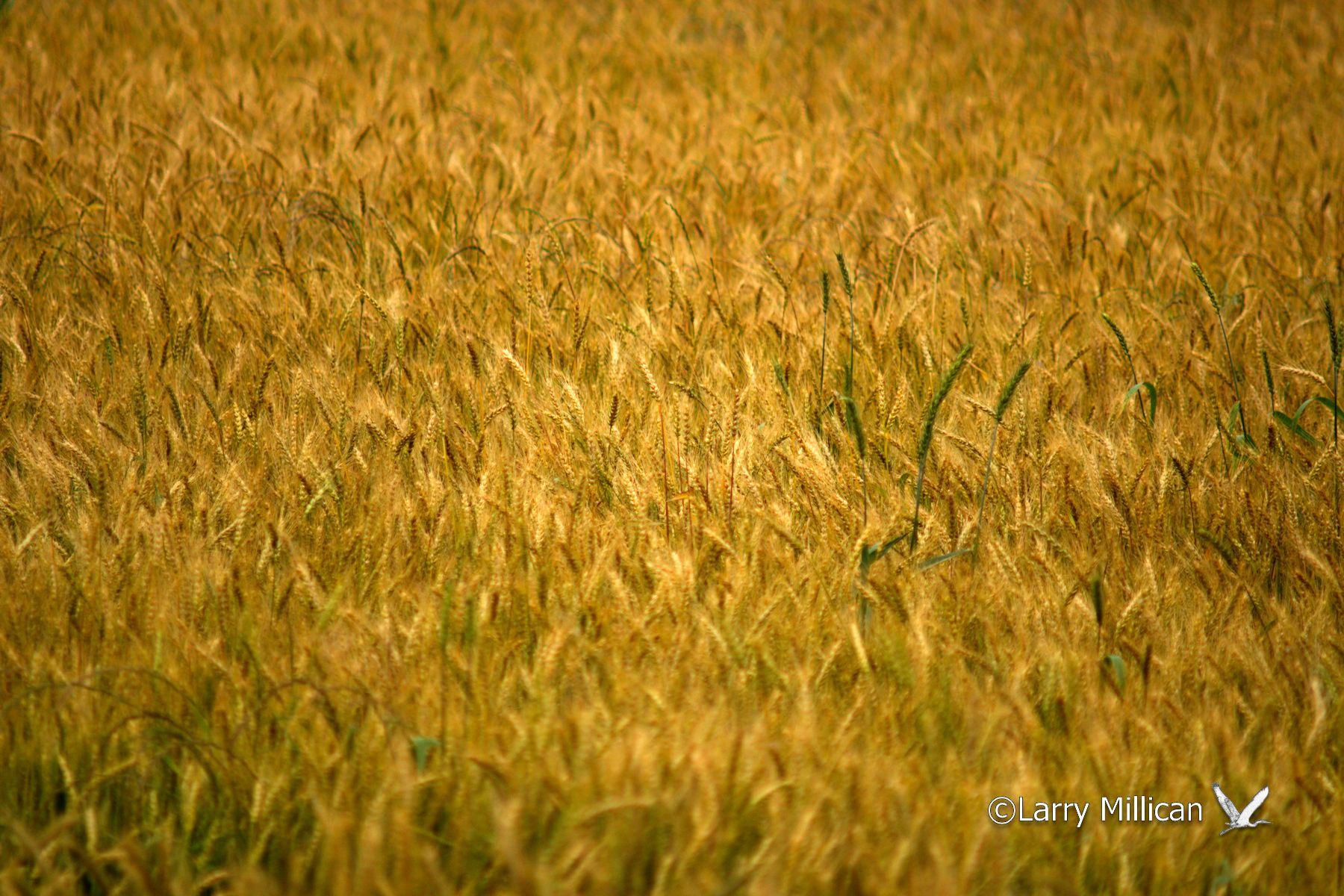
What I saw was texture and patterns.  This first image wasn’t close enough, but here’s the full image.

Unfortunately, I didn’t have a long enough lens to create the image I wanted, so here’s a crop from the first photo.

Patterns and texture.  And color – the yellow gold, with a few greens mixed in.  I think there are still some photos to find.  I’ll have to stop again.

Sony Alpha77, Minolta 70-210, Manfrotto tripod – and a GMC Jimmy.  🙂

Butterfiles along the Cossatot

Driving the backroads within the Cossatot River State Park & Natural Area, it was warm, dry, and dusty.  I was exploring, and watching for interesting subjects.  Alongside the road was a patch of thistle, the flowers in full, fresh bloom.  Swallowtail butterflies were swarming the blooms – yellow tiger, spicebush, and two-tailed swallowtails were everywhere.  They were in a feeding frenzy, and paid little attention to me and my camera.  Again, I had the 70-210 f/4 Minolta lens mounted on the camera; a long enough lens that I could reach the butterflies without being too close to cause them discomfort, but short enough that I could find them in the viewfinder quickly.  I set the aperture to f/4, with a fast shutter speed of 1/1500 sec to freeze their movements.

Here are a couple of photos.  Butterflies, flying flowers…

Eastern Tiger Swallowtail Papilio [Pterourus] glaucusEastern Tiger Swallowtail

Fort Smith Park Autumn

After record breaking heat in the summer of 2011, many of us, including me, did not expect much in the way of “color” in the fall.  However, we were pleasantly surprised and had a very colorful fall – one of my favorite seasons.

Autumn in Arkansas and Oklahoma is brief, and each year brings a different look.  Occasionally, as in 2009, we’ve had an unusually wet fall, giving us water falls, and flowing streams to complement the color.  But, more often, it’s a relatively dry season.  It’s a time of change, and a photographer is challenged to be at the right place at the right time to make an image to represent the season.

On this morning, I was driving to work, but had left home early enough to stop if I saw the right scene, in pleasant light.  Here’s one image I stopped to make.  Initially, I pointed my camera toward the just-risen sun, but that wasn’t the image I wanted.  So, I turned around, and saw the clouds, the sky, the yellow leaves, and the tree line.

What you see here, was shot as a RAW file, cropped slightly to rid the image of a light pole on the right, and some pavement on the left.  Using Corel After Shot Pro, and Corel Paint Shop Pro X4, I’ve adjusted color balance, levels, and sharpness.  Camera was the Sony Alpha 700, with a Tamron 17-50 f/2.8 lens.  Exposure was 1/250 sec. at f/5.6, ISO 200.

Fort Smith Park is on Wheeler Avenue, just west of Midland Boulevard in Fort Smith, and includes numerous picnic tables, a boat ramp to the Arkansas River, and is visited by a large number of area residents throughout the year.  It’s an old park, with old trees; a park I often visit for photographs, and I’m seldom disappointed…

Fort Smith Park Autumn

November 2011

Dogwood Blossoms

After photographing the cattle in the morning fog (see “Pastoral Morning“), I continued south on Highway 71.  But, since I had a late start – at least, later than intended – and I had stopped for the cattle photos, I knew I wouldn’t have the good early morning light on the Cossatot.  So, I decided to explore a bit.  (Exploring is good!)

Despite having driven this way many times, I had never been to Lake Hinkle, near Waldron.  I took the road to Hinkle Dam, and found it a very pleasant & pretty drive, with a stream alongside the road much of the way, farms and farmland, and woodlands with dogwoods blooming.

After visiting the dam & the lake, I stopped on the return trip near a patch of dogwoods.  From the road, there was a slight slope down to the stream, so the dogwood trees were at eye level or slightly below.  Perfect!  In addition, most of the area was in shade.  I couldn’t have asked for much better conditions.

Here are a couple of the dogwood images:

“Dogwood Parade” looks like the blossoms are lined up ready to say “look at me!  look at me!”  I like the dark background, but wish the stems & branches behind the blossoms weren’t so noticeable.

by the numbers:  Sony Alpha 77, Minolta 70-210, f/4 @ 1/200 sec, ISO 200

The next image, “Dogwood Song”, really does sing to me – or maybe makes me want to sing, which is not a good thing.  I shot again at f/4, to limit the depth of field, leaving the most predominant blossom the sharpest, and the others gradually getting softer.  Camera & lens the same…

Feel free to offer your opinion as to which you prefer.  Comments are certainly welcome…

Next time, we’ll discuss another image from another time…

Larry