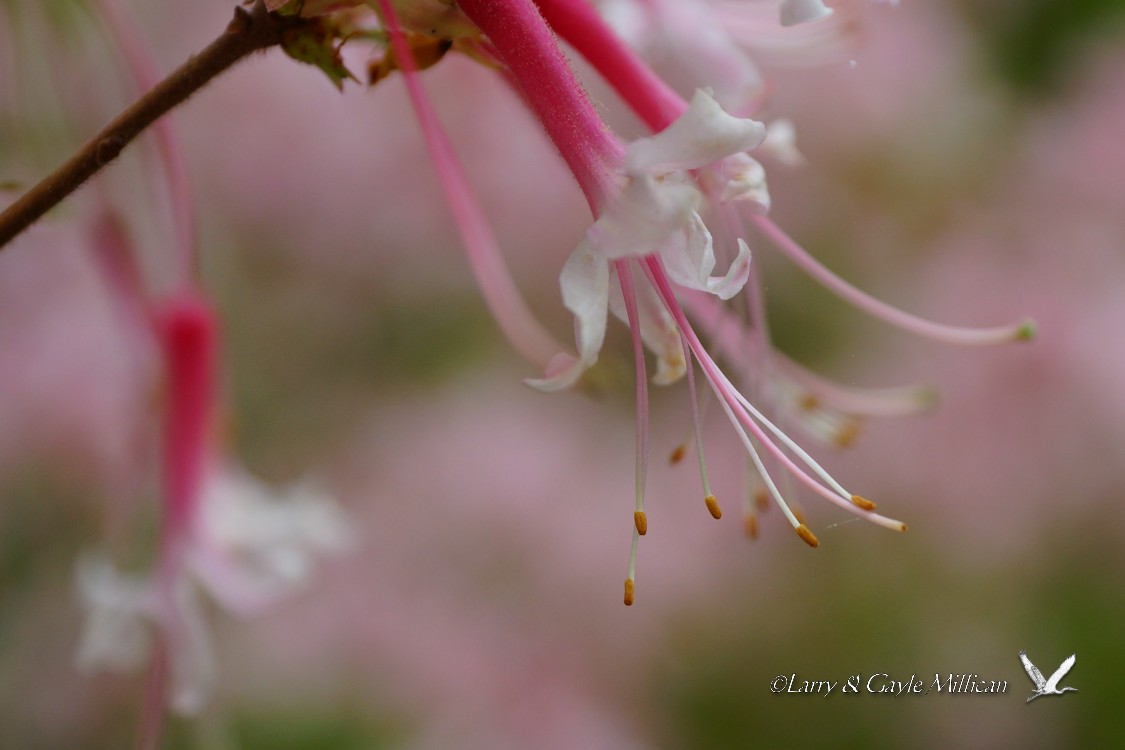
Another Visit to Cherokee Prairie

Most years, the vegetation at Cherokee Prairie is pretty much dry and dead by September, as is most flora in our region.  This year, though, was different.  On September 2, Labor Day, I drove by and saw late summer flowers and grasses.  Walking through the tall grass, I found flowers, spiders, butterflies and caterpillars.  It was a great, productive, and fun-filled couple of hours that morning…

Pearl Crescent butterfly; late summer

Pearl Crescent butterfly; late summer

Pearl_Crescent_Caterpillar

Pearl Crescent Caterpillar

In the background, you may have noticed a Purple Gerardia, aka Purple False Foxglove, (Agalinis purpurea).  There were a number of these flowers in bloom.

Purple Gerardia (aka Purple False Foxglove)  Agalinis purpurea

Purple Gerardia (aka Purple False Foxglove) Agalinis purpurea

An aster with a Crab spider in residence

An aster with a Crab spider in residence

Bicyclist passing by Cherokee Prairie on Highway 60

Bicyclist passing by Cherokee Prairie on Highway 60

Equipment included the Sony Alpha 77, Tamron 180 macro lens, Manfrotto tripod and Really Right Stuff ball head

Butterflies, spiders, insects

This spring and summer, I’ve done a lot of macro photography, mostly of flowers, but I’m always ready for other subjects that make an appearance. Here are some surprises thus far this year…


LR-r-crop-03736

“Yellowjacket Flies” – on a wild rose


Eastern Tailed-Blue, Cherokee Prairie, Charleston, Arkansas

Eastern Tailed-Blue, Cherokee Prairie, Charleston, Arkansas

OK – I’ve shown this before, but it was also a surprise. 🙂


DSC05338

Green Lynx Spider, on the back of a Sunflower.  You have to look on the back of flowers, as well as the front.


LR-r-crop-04137

Another Lynx spider, just not as green.  This one was on a yellow coneflower at Cherokee Prairie.


DSC04123

This is another fly, but is really tiny.  The real surprise here is the dew drop on its back, that I didn’t see until I downloaded the images.  There is an image of the same flower you can see in the larger dew drop.


All images shot with the Sony Alpha77 and Tamron 180 macro lens, on a Manfrotto tripod and Really Right Stuff ball head.


Cherokee Prairie

Cherokee Prairie

Each spring, I look forward to visiting Cherokee Prairie, an Arkansas Natural Heritage Site. There are a number of pieces of land in Arkansas similar to this; allowed to grow naturally, with only foot traffic allowed.
This spring, I’ve been able to make several visits to the Prairie, and here’s some of what I’ve seen – and photographed.
Among the first wildflowers to bloom is Indian Paintbrush. I visited once and they were just beginning to show color; a later visit and the Prairie was nearly covered with the colorful red flowers.

Indian Paintbrush (Castilleja coccinea), Cherokee Prairie, near Charleston, Arkansas

Indian Paintbrush (Castilleja coccinea), Cherokee Prairie, near Charleston, Arkansas

Then, in the midst of the red flowers was this yellow version.


A yellow version of Indian Paintbrush

A yellow version of Indian Paintbrush


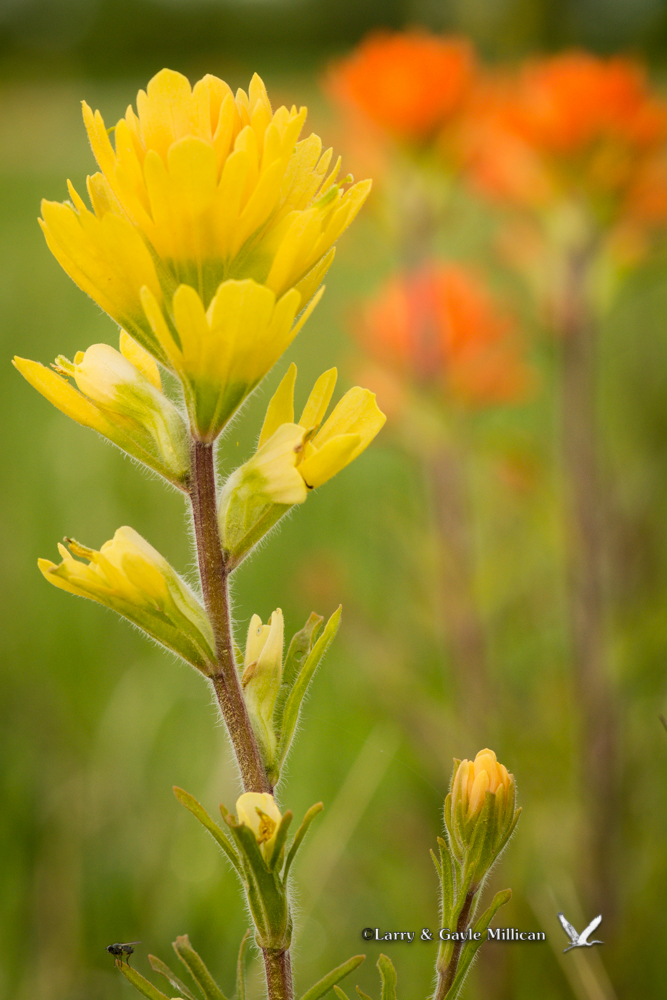
Here’s another image (my favorite) of the same yellow flower, juxtaposed with the red ones in the background.

Yellow Indian Paintbrush, Cherokee Prairie near Charleston, AR

Yellow Indian Paintbrush, Cherokee Prairie near Charleston, AR


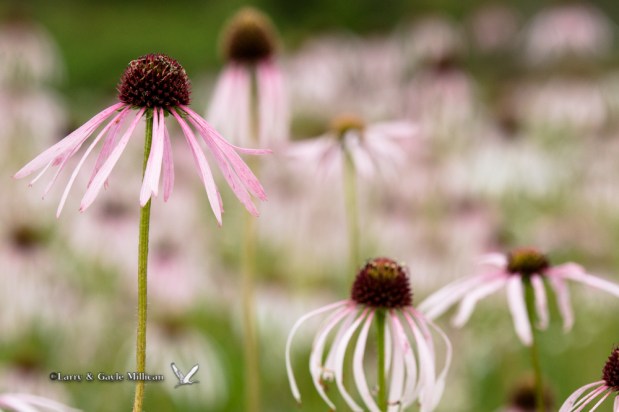
Next, a few weeks later, the Purple Coneflowers covered the Prairie:

Purple Coneflower Duo

Purple Coneflowers (Echinacea purpurea), Cherokee Prairie, Charleston, Arkansas


Purple Coneflower 03689

Purple Coneflower framed by Doll’s Daisy, Cherokee Prairie, Charleston, Arkansas

Large patch of Purple Coneflowers, Cherokee Prairie, Charleston, Arkansas

Large patch of Purple Coneflowers, Cherokee Prairie, Charleston, Arkansas


There are other wildflowers there; these are some of my favorites.

And, the visitor can also see some other “flying flowers”, such as this Eastern Tailed-Blue.  This was a first for me, and I appreciate our friend, Anne Sayers, helping identify it…

Eastern Tailed-Blue, Cherokee Prairie, Charleston, Arkansas

Eastern Tailed-Blue, Cherokee Prairie, Charleston, Arkansas


These images were all made with the Sony Alpha77, a Minolta 100mm macro lens and, more recently, a Tamron 180mm macro lens, Manfrotto tripod and Really Right Stuff ball head.  And, all the water drops were there before I was…  🙂


Black Bass Lake

Every two years, the Photographic Society of Northwest Arkansas (www.psnwa.org) hosts the Mid-America Photographic Symposium (MAPSYM). This year, for the first time, I was able to attend the weekend event, held in Eureka Springs, Arkansas. Kudos to the PSNWA for putting on a first-class event, aimed at photography enthusiasts and professionals alike.

One outing I joined was an early morning “Nature Hike” at Black Bass Lake.  Even if you’ve ever been to Eureka Springs, a small community built on a steep hillside, I doubt you’ve heard about this lake. At least, I hadn’t, and I overheard another participant, from the area, say the same thing.  So, we drove down a steep hill on a gravel road, to the lake, and it was like going to another world; right in the middle of the community, we were suddenly in a wilderness.  It was so cool! (Are we supposed to say “cool” any more? I can’t keep up, so I just say what I feel.)
The morning was typical spring for this area; cool and damp. The lake had some misty fog hanging over the surface, and fortuitously, there were two fishermen in a small boat…

Two fishermen on Black Bass Lake, in the misty fog.

Two fishermen on Black Bass Lake, in the misty fog.


Walking one of the trails around the lake, I photographed this C-curved blade of grass, with a dew drop hanging on.  Those that know me, and especially those that have sat through a class with me, have heard me stress simplicity…

C-dew drop

Dew drop clings to a curved blade of grass, alongside Black Bass Lake, Eureka Springs, Arkansas


There were also a number of these purple flowers; according to Don Kurz’s Arkansas Wildflowers book, it’s called the Leather Flower.  Cool flower…

Leather Flower (Clematis versicolor)

Leather Flower along Black Bass Lake, Eureka Springs, Arkansas


So, it was an interesting weekend.  I learned a bit about how Hanson Fong takes portraits, saw & listened to Nikon’s Mark Kettenhofen deliver an awesome keynote presentation, and more.  Glad I went.  🙂


Camera used was the Sony Alpha 77, Sony 16-50 f/2.8 (I love this lens!) and Minolta 100 macro, Manfrotto tripod with Really Right Stuff ball head.


Garvan Woodland Gardens

In April this year, I visited Garvan Woodland Gardens, in Hot Springs, Arkansas.  My first time there, although it is a place high on my want-to-go-to list for some time.  Mid-April was a little late for the tulips, which are reportedly spectacular, but there was still lots of colorful flowers covering the grounds.

So here are a few selected photos.  Hope you enjoy!

Rhododendrons by the waterfall.

3064WaterfallAndRhododenrons

Garvan Woodland Gardens, small waterfall with rhododendrons.

Some remnants of tulips in front of red flowers (no – I don’t remember what they are.)

Tulip remnants with red flowers in the background.

Tulip remnants with red flowers in the background.

Along a path, there was a late blooming river of tulips.

A River of Tulips

A River of Tulips


Here is a tight crop of the tulips from the “river.”

The river of tulips, Garvan Woodland Gardens, Hot Springs, Arkansas

The river of tulips, crop, Garvan Woodland Gardens, Hot Springs, Arkansas

Closeup of rhododendrons.

Closeup of some rhododendrons, Garvan Woodland Gardens, Hot Springs, Arkansas

Closeup of some rhododendrons, Garvan Woodland Gardens, Hot Springs, Arkansas


The Gardens have flowers in bloom throughout the spring and summer, but are well known for their tulips displays in early spring.  Maybe next year…

Photos were all taken with the Sony Alpha 77, and the Sony 16-50 f/2.8 lens and the Minolta 100 f/2.8 macro lens.


High Island, Texas

About 30 miles east of Galveston is the small town of High Island. Although it is a small community, birders the world over know the name. The Houston Audubon Society has converted a large portion of the town into a sanctuary, with wooded areas, and a heron rookery, and each spring, the area fills with migrating songbirds. The High Island Sanctuaries are a definite visit when we travel to the area.

Southeast Texas map

Southeast Texas map

In April, the rookery fills with Great Egrets, along with cormorants, eye-catching roseate spoonbills, and tri-colored and night herons, mating and building nests. For birders and especially photographers, the good news is the rookery is on an island about 20 yards from the pond banks. The pond, called “Claybottom Pond” is filled with alligators, making the island safe from predators such as raccoons; but of course, if any birds get too close, they make a meal for a hungry alligator!

For an unknown reason, this Great Egret pair was nesting a bit later than most of the others; the male would fly away and come back with nesting material, then present it to his mate, who would add it to the nest.  In this photo, his raised wing seems protective and caring.  I think I was fortunate to capture this moment; it’s one of our favorite photos…

Great Egrets build their nest

A Great Egret pair works together to build their nest at The Rookery, High Island, Texas


Sony Alpha 100, Tamron 300 f/2.8 with Tamron 2x teleconverter, Manfrotto tripod


Red Reflections

I first saw reflections in water drops in a magazine – probably Outdoor Photographer.  The photos were fascinating, and I decided it was a subject/technique I needed to learn.  There were a number of failures over the years, until this photo.

On the day I took this, I was visiting Cherokee Prairie Natural Area.  In fact, I had been there for a while, searching the Prairie for just the right combination of water drops, grass tangles, flowers, and light.  I had no success, and was walking back to my truck, when at the very edge of the parking area was a perfect arrangement.  I set the tripod up in the short grass of the parking area, and made a number of exposures…

One of the problems with making these photographs is that all of the vegetation – grass, flowers, shrubs, briars – is connected!  Setting a tripod up without causing the water drops to fall is sometimes impossible.  Often, I get it almost just right, move the tripod – or the camera & lens – and bump or pull something, causing the water drops to disappear.  So, finding this at the parking lot was exciting!  Ever since that day, I always look around the parking area before heading off into the grasses of the prairie…

Wild rose reflected in water drops on grass

Wild rose reflected in water drops on grass
Cherokee Prairie State Natural Area, near Charleston, Arkansas

I have always like the sharpness of this image, but would like to have the same situation again; I think it deserves some different compositions, and would like to shoot it with one of today’s higher resolution cameras.  However, photographs are the reflection of a moment, then it’s history.  As much as we might wish to relive our past, we cannot…  😉


Minolta Maxxum 7D, Minolta Maxxum 100 mm macro lens, Manfrotto tripod.

Reflections

Each spring, I look forward to going out to locate, and photograph dew drops reflecting, preferably, a wildflower.  Of course, any breeze, even one barely felt on skin, is the enemy.  So, we hope for no breeze, large dew drops easily photographed, and a colorful wildflower behind…

On this morning, I found a spiderweb covered in dew, and in the background was a black-eyed susan wildflower.  However, there was a nearly imperceptible breeze – just enough to move the spiderweb.  I took several photos, trying to time the exposure for the least movement.  Here is one of the best, but because of the air movement, I was unable to keep all in sharp focus.

Dew drops on a spider web reflect the black eyed susan flower in the background.

Dew drops on a spider web reflect the black eyed susan flower in the background.


I took this photo at Cherokee Prairie Preserve State Heritage Site, near Charleston, Arkansas, using the Sony Alpha 700, the Minolta 100 mm macro lens, Manfrotto tripod.  The shutter speed was 1/320th second, in an attempt to freeze the movement from the breeze, at f/8.

Route 66 Revisited

Route 66 Revisited

Two years after our Route 66 day trip, I journeyed to the little town of Bristow, site of the “Route 66 Classic Car Show.”  I had searched for a destination and found the car show, and decided to check it out.  Gayle was unable to go with me, so I didn’t plan an extended outing, but couldn’t resist the opportunity to revisit the Mother Road.

Bristow, Oklahoma, is a small town, but on this day, it was full of cars, people, motorcycles, and tractors.  The car show was bigger than I expected, and I thoroughly enjoyed it.

Bristow Classic Car Show

Main Street in Bristow was full of classic cars, both restored and custom.


1956 Ford Thunderbird

A 1956 Ford Thunderbird sits on Bristow’s Main Street during the Route 66 Classic Car Show


1966 Ford Mustang Coupe

A 1966 Ford Mustang Coupe on display at the Bristow, Oklahoma, Route 66 Classic Car Show. As an 18-year old, I drove one just like it!


I left Bristow, and headed back toward Tulsa.  But, there are always photographs.  These mailboxes were just off the highway, and I had to stop.  They speak of rural Oklahoma, and simpler times gone by.

Mailboxes along Route 66 in Oklahoma

A rural Mail Center, along Route 66. It could be any location; where I grew up, the families still get their mail similarly – 2 miles or more from home.


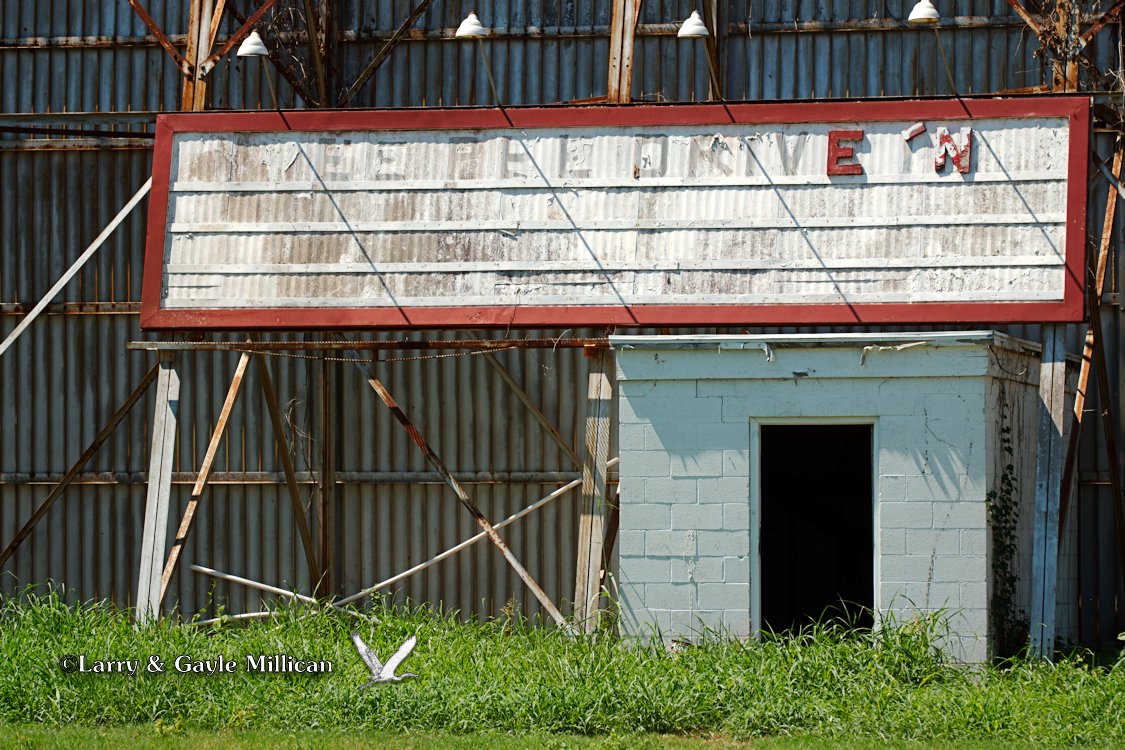
I also stopped by the Rock Creek Bridge, and the Tee Pee Drive In, near Sapulpa.  The drive-in theater has not seen a movie in a decade or more, but still stands as a reminder of other times.

Tee Pee Drive In near Sapulpa OK

Near Sapulpa, Oklahoma, the Tee Pee Drive In Theater still stands, only a few faded letters remain on the sign


Rock Creek Bridge

The Rock Creek Bridge, near Sapulpa, is about a quarter mile from the Tee Pee Drive In. It is unique being one of few brick paved bridges remaining in the country.


These photos were taken September 1, 2012.  I used a Sony Alpha 77 camera, and Tamron lenses – mostly my favorite, the 17-50 f/2.8 zoom.


Route 66

A couple of years ago, we spent a day traveling from Tulsa, Oklahoma to Oklahoma City, via the remains of old Route 66.  In some areas, there is still highway; in others, we have to travel on newer roads that parallel the old.  We plan to do more, but for now, here are a few images from that day.

Many of the attractions from the old days are still in place – as well as new ones for the tourists.  It is interesting to note that many people, some from around the world, come to see what was known as “The Mother Road,” even those that are too young to have ever traveled upon the road…

The 5 and Diner restaurant, Tulsa

A neon sign lights up the Tulsa night at the 5 and Diner restaurant, reminiscent of a 50’s diner

Coca-Cola Sign refurbished in Stroud

In Stroud, a Coca-Cola sign has been colorfully restored on the side of a downtown building.

Hickory House Mural

Mural painted on the wall of the Hickory House Barbecue Restaurant in Sapulpa depicts Route 66 scenes and history

Chandler Interpretive Center

The Chandler Interpretive Center is an interactive multimedia museum, with film clips of Route 66 stories, viewed in seats from period cars, theatre seats, and even a motel bed.

The Old Cotton Gin

The Old Cotton Gin, it has also been a restaurant, an antiques store, and a second-hand goods store.

Having lived in California for several years as a child, I remember traveling Route 66 to visit family in Oklahoma.  Before there was an Interstate 40 highway, we drove through Arizona, New Mexico, Texas, and into our home state of Oklahoma.  Nostalgic?  Perhaps, but I also appreciate the history represented by the remnants of old Route 66…

These photographs were created with a Sony Alpha 77 camera, a Tamron 17-50 lens, and often a circular polarizing filter.  I edited the raw files with Paint Shop Pro.